In today’s competitive manufacturing environment, machining efficiency is measured by far more than cutting speed alone. Tool life, process stability, surface quality, and cost per part all play a decisive role in overall productivity. One of the most effective ways to improve performance across all these areas is through advanced cutting tool coatings. ISCAR, a global leader in metal cutting solutions, has developed a comprehensive portfolio of Physical Vapor Deposition (PVD) and Chemical Vapor Deposition (CVD) coatings that help manufacturers maximize tool life while increasing output in demanding applications. Uncoated cutting tools are rarely viable in modern production due to their limited resistance to wear, heat, and chemical interaction with the workpiece. Advanced coatings form a protective and functional layer between the tool substrate and the cutting zone, reducing friction, resisting wear mechanisms such as abrasion, adhesion, diffusion, and oxidation, and improving thermal stability. ISCAR’s coating technologies are engineered to perform across a wide range of materials, including carbon steels, stainless steels, cast irons, superalloys, and hardened materials, enabling consistent results in both general and high-performance machining.
PVD coatings are a cornerstone of ISCAR’s solution offering, particularly for applications requiring sharp cutting edges and high toughness. Because PVD coatings are applied at relatively low temperatures, they preserve substrate strength and edge geometry, making them ideal for milling, drilling, and finishing operations. ISCAR’s TiAlN- and AlTiN-based PVD coatings, used across grades such as the IC900 and IC800 series, deliver a combination of high hardness and toughness through advanced nanolayer and nanostructured designs. These coatings provide excellent resistance to flank wear and micro-chipping, even in interrupted cuts. Their low coefficient of friction reduces cutting forces and heat generation, resulting in improved surface finish and greater process stability, particularly in stainless steels and high-temperature alloys.
For high-volume production and continuous cutting operations, ISCAR’s CVD-coated inserts (Fig. 1) are widely used due to their durability and thermal performance. Marketed under the well-known SUMOTEC post-coating treatment technology (Fig. 2), ISCAR CVD coatings are typically thicker and optimized for robust carbide substrates. Grades such as IC8250 and IC5010 are engineered to deliver outstanding resistance to abrasion and crater wear while providing effective thermal insulation at the cutting edge. This heat-barrier effect allows higher cutting speeds in steel and cast-iron machining without compromising tool life, making these coatings especially valuable in turning applications and automated production lines where consistency over long runs is critical.
A defining feature of ISCAR’s coating technology is its use of advanced multilayer and gradient architecture. Rather than relying on a single coating material, ISCAR designs coating systems in which each layer serves a specific purpose. Hard outer layers resist abrasive wear, tougher inner layers absorb mechanical shock, and heat-resistant layers manage extreme cutting temperatures. This engineered structure allows the coating to adapt to changing cutting conditions throughout the tool’s life, maintaining edge integrity and predictable wear behavior from the first cut to the last.
Although advanced coatings may increase the initial cost of a cutting tool, their effect on overall manufacturing economics is significant. Extended tool life reduces tool change frequency and machine downtime, while the ability to run higher speeds and feeds increases material removal rates and shortens cycle times. Improved process reliability minimizes scrap and rework, ultimately lowering the cost per part. In many applications, the productivity gains delivered by ISCAR’s coated tools far outweigh the additional investment in advanced coating technology.
Achieving maximum benefit from these coatings requires careful selection based on the specific application. Workpiece material, cutting parameters, coolant strategy, and machine rigidity all influence coating performance. ISCAR supports manufacturers through application specific tool families and technical expertise, ensuring that the coating, carbide grade, and tool geometry function together as a complete and optimized system.
As machining continues to evolve toward higher efficiency, tighter tolerances, and increased automation, advanced PVD and CVD coatings are no longer optional, they are essential. Through technologies such as SUMOTEC CVD coatings and high-performance TiAlN- and AlTiN-based PVD solutions, ISCAR continues to combine materials science with real-world machining experience. The result is longer tool life, higher productivity, and more predictable processes, helping manufacturers remain competitive in modern metal cutting operations.


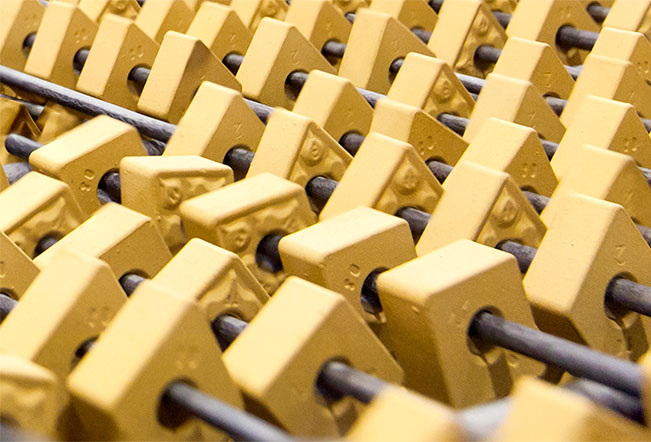 Fig.1
Fig.1
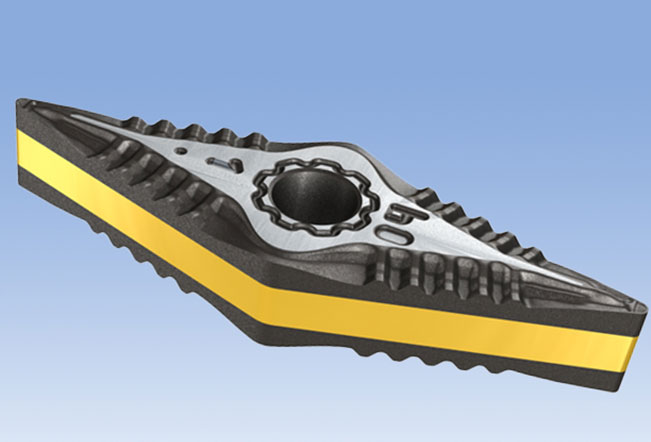 Fig.2
Fig.2